

Team Settings
Settings groups everything that configures a team: who is in it, what connects to it, what it notifies, and what it costs. The pages you can open depend on your role, and so do the switches you can change. A page you can read but not edit shows its values greyed out rather than hiding them.
General
Event Collection holds the AI Insights switch, which turns AI analysis of your data on or off for the whole team.
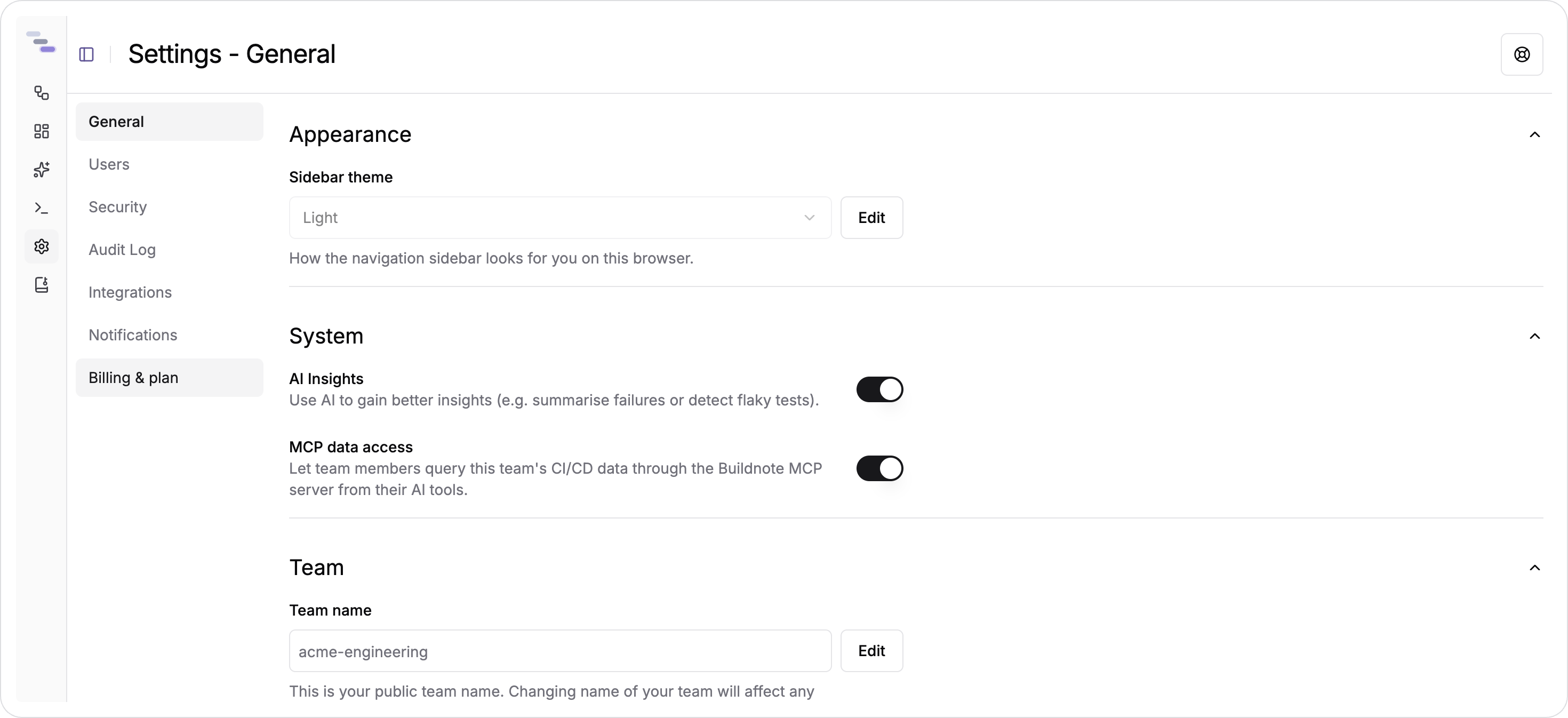
Admins and Billing Managers can change that switch; everyone else sees its state. See AI Insights for what it enables and what it costs.
Team holds the team name. Renaming a team changes the URLs that contain it, so bookmarks and shared links pointing at the old name stop resolving. Rename early rather than often. The danger zone at the bottom deletes the team along with its data, and is disabled while anything prevents deletion, such as an active subscription.
Users
Admins invite members by email address, and the list shows both accepted members and pending invitations with their status.
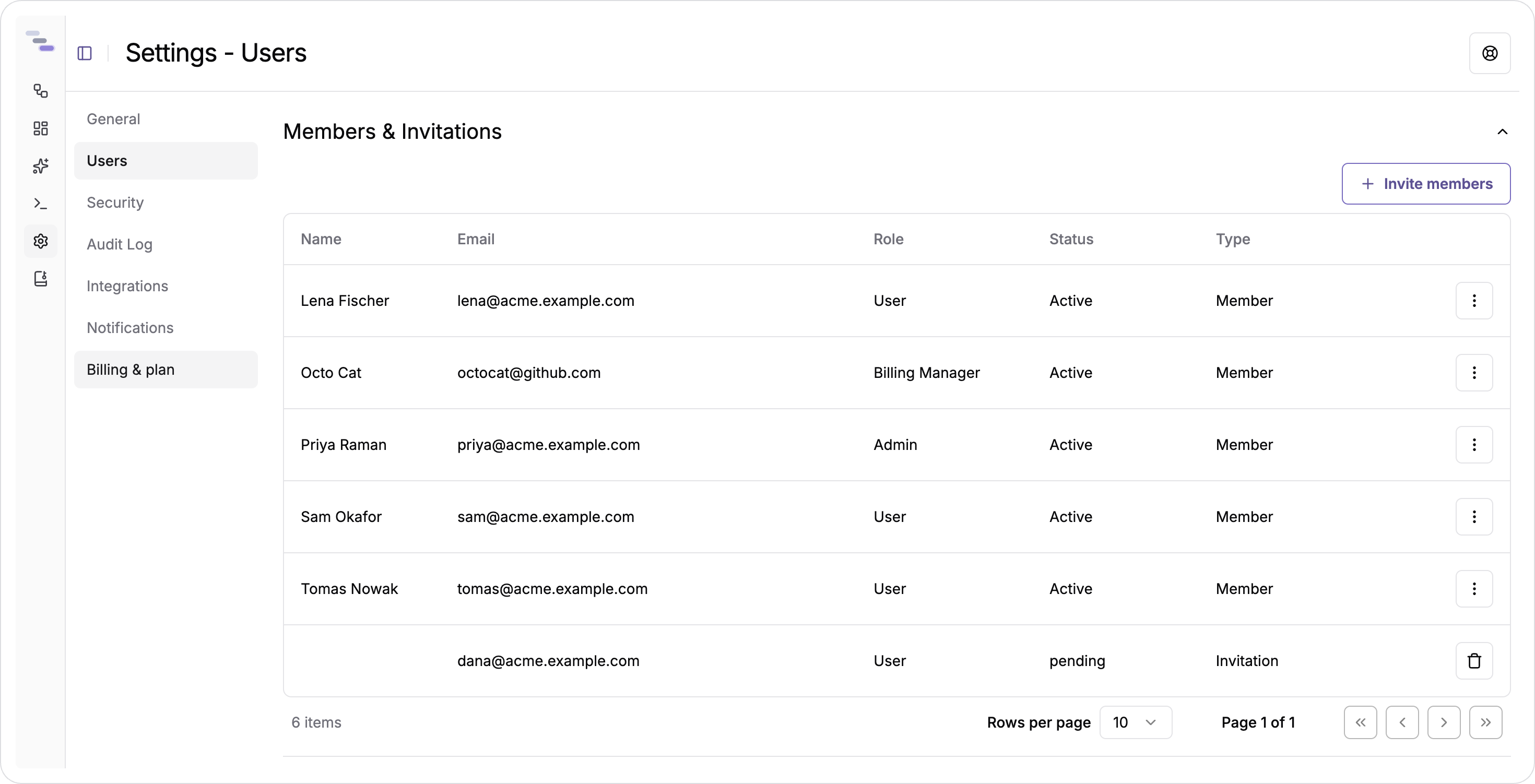
From the same list you change a member's role or remove them, each behind a confirmation. An invitation stays pending until the person accepts it, and can be withdrawn in the meantime.
Three roles exist. A User reads builds and events, uses dashboards and the query editor, and manages notification subscriptions. An Admin adds member management, integration setup, API keys, renaming and deleting the team, and visibility of plan and usage. A Billing Manager adds plan changes, payment methods, subscription details, and invoices. That is the role your account starts with on the team created for you at sign-up.
Some capabilities also depend on the plan rather than the role. Free-plan teams collect events only through a version control integration, so API keys, the query editor, dashboards, notifications, and the AI features are not offered until the team upgrades.
Security
API keys authenticate the CLI and the Data API. Create one with a name and copy it straight away: the key is displayed once and cannot be retrieved afterwards.
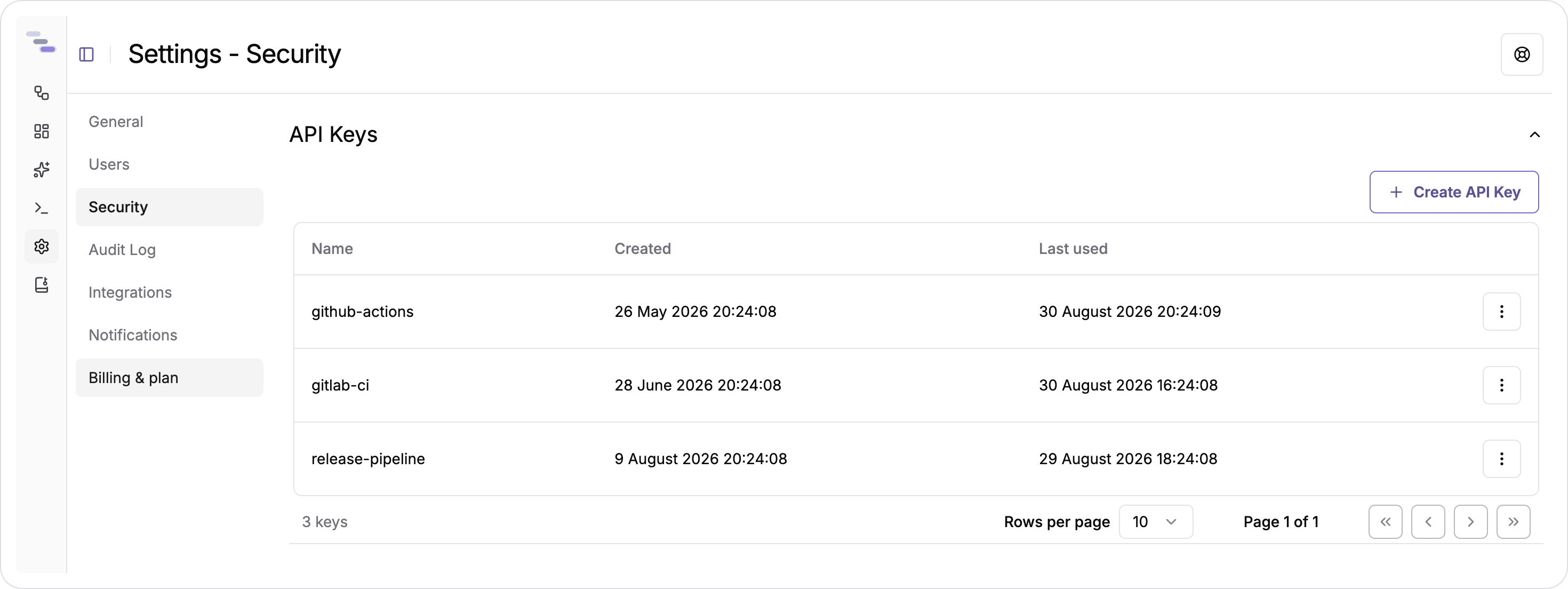
The list records when each key was created and last used, which is how you find the ones nobody needs any more, and any key can be deleted to revoke it. Give each pipeline its own key rather than sharing one, so revoking a key never takes down more than the thing it belonged to.
Integrations
Integrations connect a team to the systems around it. The page splits into what you have connected and what is available to connect.
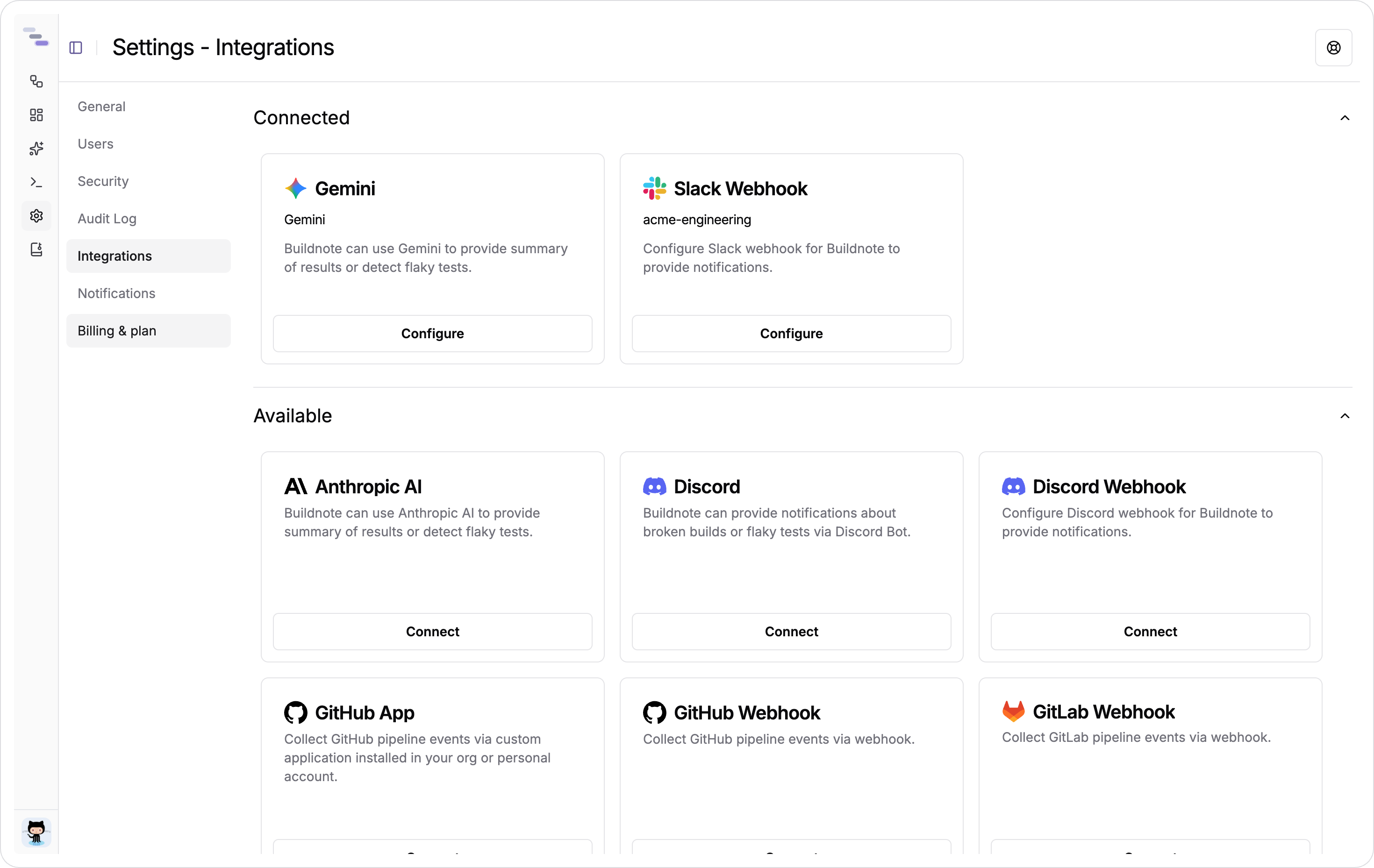
For pipelines and code, the GitHub app records workflow runs and commits with the least setup, and webhook integrations cover GitHub and GitLab where an app installation is not an option. See the GitHub and GitLab guides.
For messaging, the Slack and Discord integrations install as apps or as incoming webhooks and become the channels that notification subscriptions post to.
For identity, SAML SSO connects your organisation's provider so members sign in with their existing credentials.
For AI, Anthropic, Google Gemini, and OpenAI integrations supply the model behind failure summaries and the assistant. Each asks for a name, an API key, and a model.
A connected integration offers Configure to edit it and Disconnect to remove it. Disconnecting stops the events or messages it carries; historical data already collected stays.
Notifications
Notifications are organised as subscriptions grouped by what happened, such as failing pipelines and build steps or failing tests.
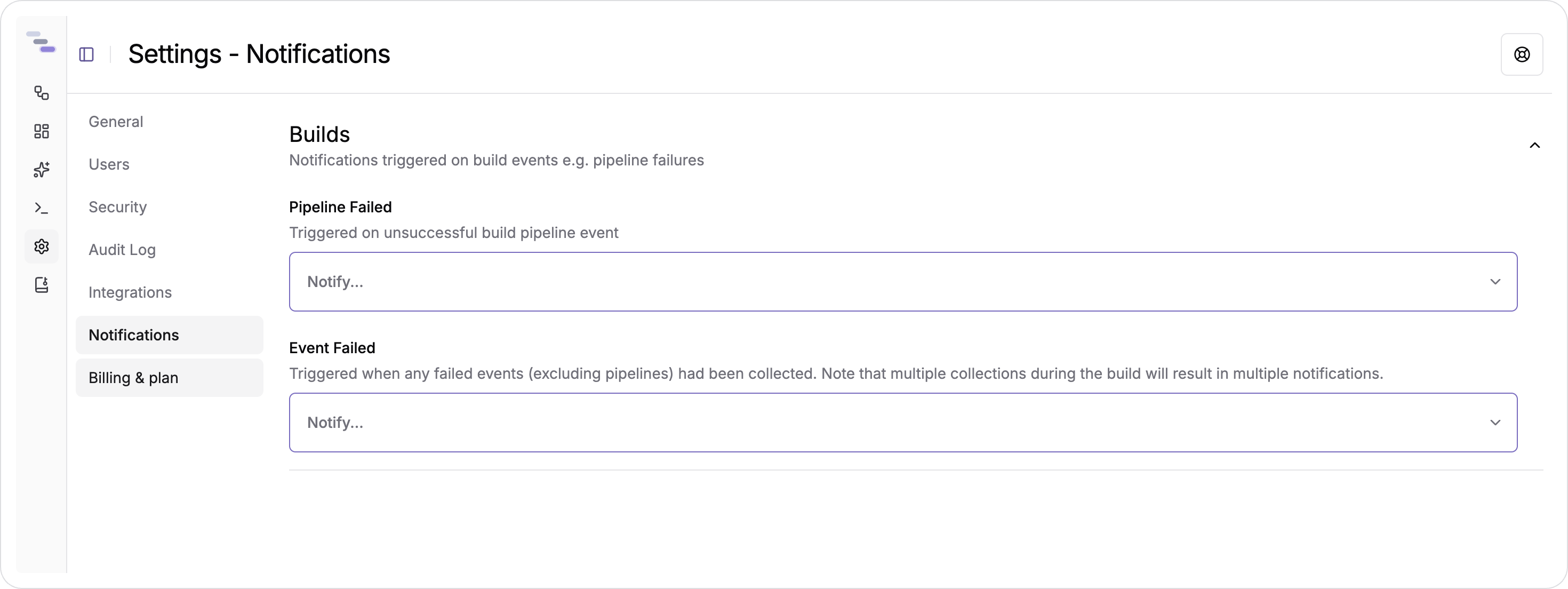
For each one you choose which connected channels receive it, picking as many as you need from the channels your integrations provide. A subscription with no channels is simply off. Anyone on the team can manage subscriptions, so people follow the pipelines they own rather than everything.
Billing and plan
Billing Managers see the current plan and the usage that drives the bill for the period, covering submitters, events, collections, and storage, alongside subscriptions, payment methods, and the billing email. Invoices are listed for download, and plan upgrades and downgrades happen from this page.
Pricing detail for each plan is on the pricing page.