

What Is Buildnote?
Buildnote is a SaaS observability platform that helps engineering teams monitor and improve their CI/CD pipelines.
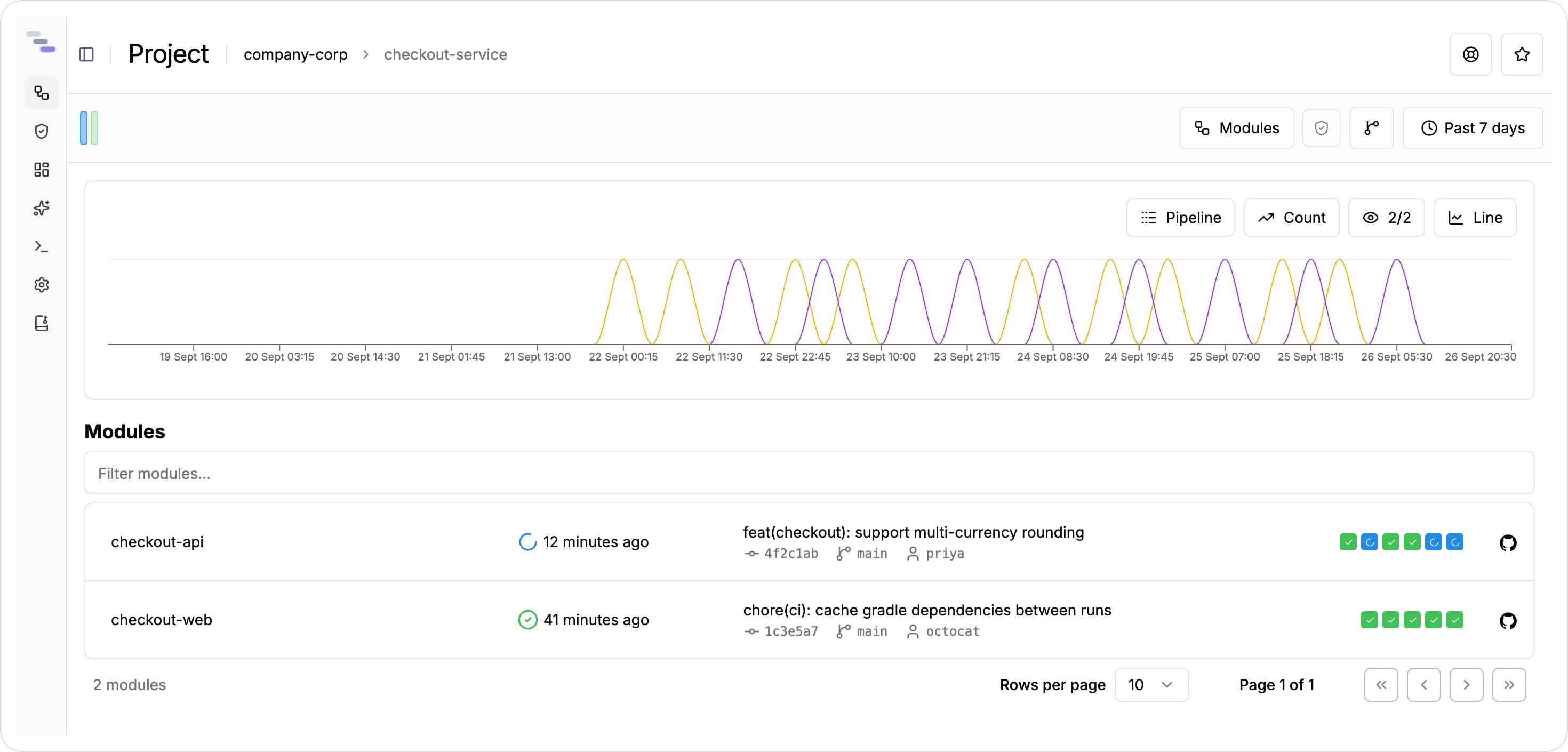
Buildnote fills the visibility gap in pre-production environments. It collects metrics from your development workflows and tracks how they change over time. This makes it easier to spot bottlenecks, debug problems faster and keep costs under control.
You get real-time information about pipeline performance, key metrics tracked across builds, and help finding problematic tests. You can compare performance between branches, explore detailed build timelines to debug quickly, and trace performance problems back to the commit that caused them, with the error messages and logs alongside.
Just want to try it out? Skip to Getting Started. Already collecting events? See Using The App.
Capabilities
Buildnote collects events from several parts of your development stack. It reads test results in standard formats, records pipeline builds and stages through your version control integration, collects files and command statistics with the CLI, and gathers build tool metrics through plugins.
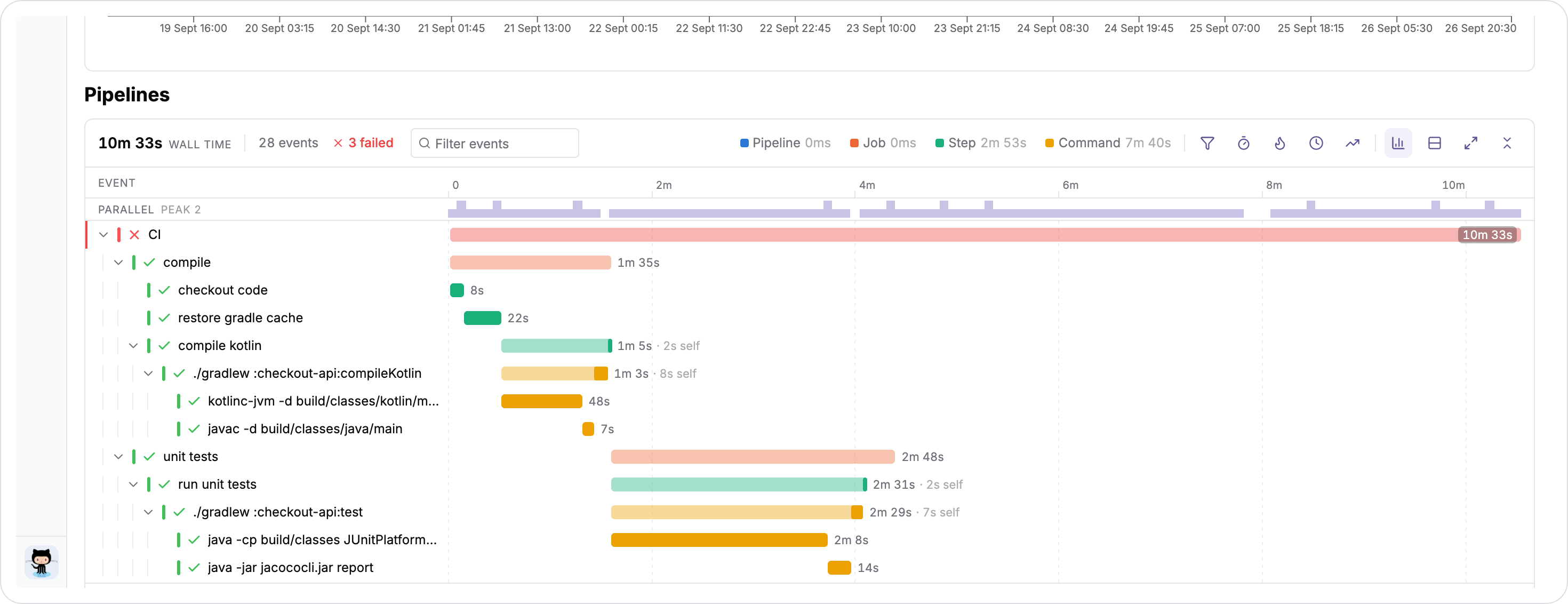
The GitHub and GitLab integrations record your pipelines and can also be used to sign in. You can sign in with an OAuth provider, with email and password, or with SSO.
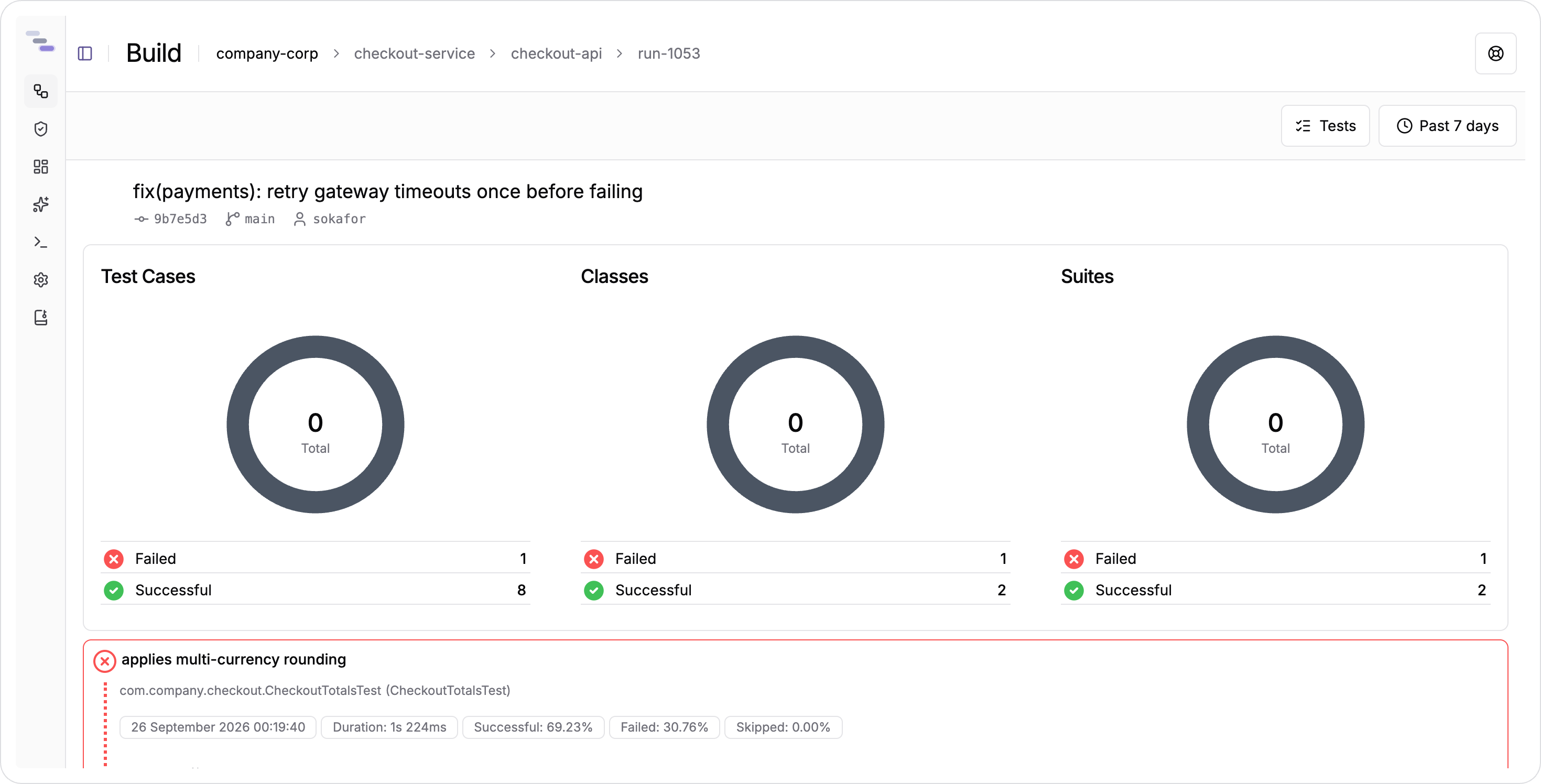
You can get notifications in the messaging tools you already use when pipelines fail, build steps break or tests start to flake.
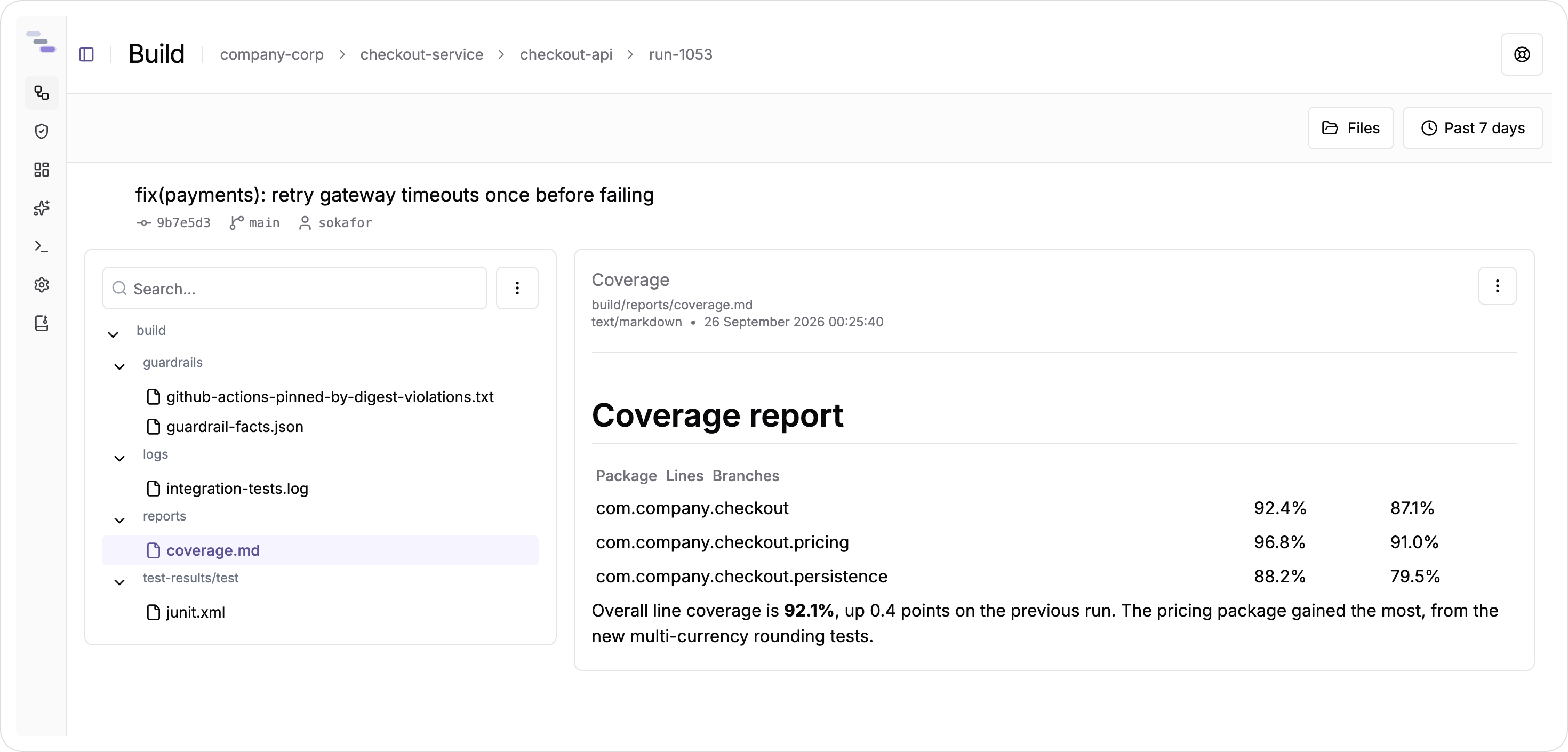
Buildnote collects attachments automatically and displays them in the app, including images, audio, video, API specifications, diagrams and documentation formats.
Use Cases
Pipeline Performance Optimization
Slow CI/CD pipelines hurt developer productivity. Waiting for builds means switching context, which breaks concentration. Slow feedback also encourages developers to batch several changes together, which makes it much harder to debug when something breaks.
Buildnote helps you monitor build times across environments, track success and failure rates over time, and find the commits that introduced performance regressions. Resource usage analysis helps you reduce costs without losing performance. Teams typically see pipeline times drop significantly. That changes how developers approach their daily work and removes mental overhead that can cost each developer hours every day.
Test Quality and Reliability
As codebases grow and test environments become more complex, keeping tests efficient gets harder. Buildnote helps by analysing your tests with tracing and monitoring, so you can find the problematic ones and decide which to fix first.
Analysis across environments finds errors and slow spots in complex end-to-end and integration tests that span multiple services. Performance monitoring lets you deal with slow tests before they slow down development. When tests are reliable and fast, developers trust their test suites and aren't tempted to skip testing steps.
AI Insights automatically analyses test and build failures and gives you short summaries with useful context. It spots patterns in how things fail, tells real failures apart from flaky tests, and explains what went wrong and why. This turns slow manual debugging into quick triage, so developers can decide whether a failure needs attention now or comes from an unstable test that needs fixing.
Development Team Productivity
Debugging test failures often means slow manual investigation, especially in complex integration scenarios. Slow builds also lower team morale, and technical debt builds up as developers become reluctant to refactor.
Buildnote speeds up debugging with detailed build timelines that help you triage quickly and link failures to specific code changes and events. Analysis across branches gives you data to base optimisation decisions on. You can find which commits introduced problems, look at error patterns across builds, and fix issues before they grow into bigger ones.
Continuous Integration Excellence
Good CI/CD workflows are essential for delivering software quickly and efficiently. Teams with well-tuned continuous integration ship smaller changes more often and catch problems earlier. Research shows that these teams deploy much more often, with much shorter lead times, than teams with slow pipelines.
Buildnote supports this with end-to-end pipeline visibility, historical trends for tracking performance, and integration with the development tools you already use. Team-based access with roles makes sure the right people get the right information when they need it. Together, these help teams deploy more often and recover from incidents faster.